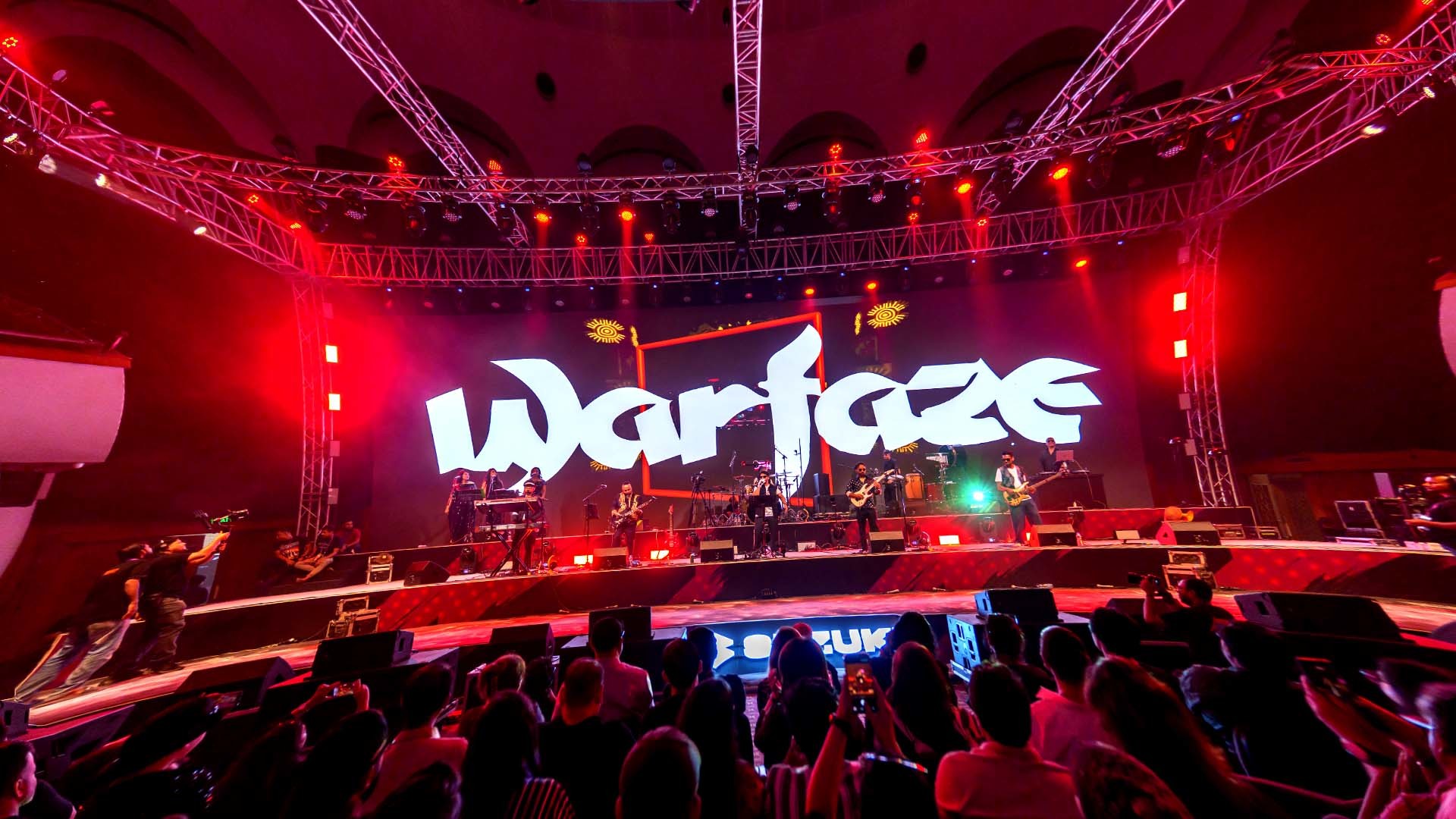

In 2014, Michael Jackson walked back onto a stage in Las Vegas, five years after his death. Gold jacket, red trousers, sixteen live dancers, a live band. The Billboard Music Awards, MGM Grand Garden Arena. It took nearly six months to build, a Hollywood production team, and the full backing of the Michael Jackson Estate. For a few minutes, an audience stopped being sure what it was looking at.
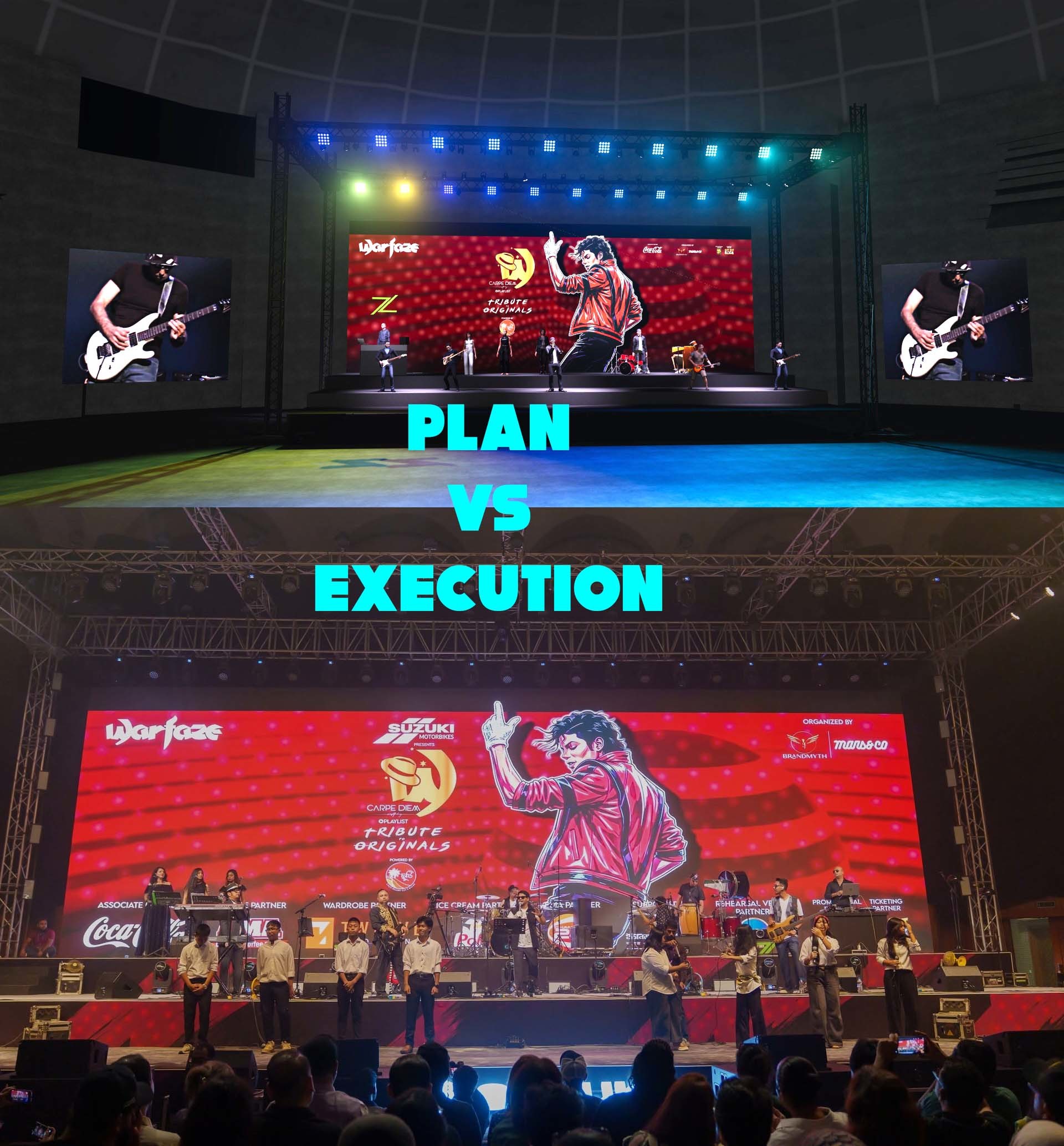
Twelve years later, I sat in Dhaka with a setlist, a three-person team, and a question: can we bring that idea here — not the budget, not the Estate, not the six months — just the idea?
On 31 July 2026, at a 2,500-capacity venue in Dhaka, we did. A 180-second live holographic illusion, performed in real time in the room. The first time it's been done on a concert stage in Bangladesh.
This is the story of how, and what it teaches anyone trying to pull off something similar without a Vegas budget.
THE BRIEF
The show was a Michael Jackson tribute performed by Warfaze — Bangladesh's most influential heavy metal band, 42 years into their career, playing MJ's catalogue for two hours before switching into their own material for a third. The event was organized under Brandmyth Limited & Mars & Co., who ran the commercial and operational side — venue, contracts, ticketing, sponsor obligations. I was brought in as Technical Director, responsible for everything on the technical side: lighting, LED, sound coordination, camera, choreography timing, and the visual content — including a holographic segment nobody in this market had attempted at this scale before.
I didn't pitch for the job. The band's leader recommended me directly, and the agency already knew my work from earlier projects. That meant I walked in without having to prove I belonged in the room — which let me spend the actual runway on the hard problem instead of the easy one.
The hard problem was this: Michael Jackson's music is built on dense studio production — layers of synth, almost no guitar — and it had to be reshaped into a rock band's voice while still being unmistakably him. That tension had to show up in every layer I controlled: light, image, motion, timing.
WHY A HOLOGRAM, AND WHY IT'S HARDER THAN IT LOOKS
Everyone assumes a holographic illusion is a visual effect — something you build once and drop into a show. It isn't. It's an agreement between departments.
A hologram illusion of this kind only exists inside one exact lighting condition. Break that condition for even a second and the illusion collapses. Which means for those 180 seconds, every other department has to give something up simultaneously:
The lighting console has to hit an exact state and hold it — no adjustments, no reactive cues.
Follow spot operators have to not do the thing follow spot operators instinctively do.
The camera team has to know precisely where they can and cannot stand.
Choreography has to keep performers inside a boundary the audience can't see but the optics can't forgive.
The audio cue has to land exactly on the frame, not near it.
None of that happens by accident on the night. It has to exist on paper — in the technical riders, the cue sheet, the choreography notes — a month before it exists on a stage. By the time we got to load-in, that 180-second window had already been negotiated, in writing, by six departments who had never worked together before.
That's the actual skill in delivering a moment like this. Not the hologram hardware. The choreography of restraint across an entire production team.

BUILDING THE ROOM BEFORE THE ROOM EXISTS
Before a single truss went up, the entire stage existed in 3D — LED wall, truss and fixture positions, sightlines, the light throw, the audience geometry. Not for a nice render. For settling arguments before they happened on the floor.
Previsualization is how you find out a follow spot is blocked, or a projector throw clips a truss, or a performer's entry path crosses a cable run — in a file, weeks out, instead of on load-in day with seven crews standing around waiting for you to solve it live.
When the lighting engineer, the LED engineer, and the choreographer are all looking at the same 3D frame, the conversation stops being an opinion and starts being a fact everyone can see.
THE DOCUMENT THAT DID THE ACTUAL WORK
If you asked me what technical direction looks like on paper, I'd point to one document: a locked, per-song colour guide, built across three revisions, used simultaneously by the lighting console and the video system.
It sounds unglamorous. It's the reason the show worked. Instead of two departments guessing what "make it feel like Smooth Criminal" means in the room, in real time, under pressure — they had a value they'd already agreed on a month earlier. A colour palette, in writing, is a contract. It turns a subjective creative instruction into something two separate operators can execute independently and still land in the same place.
Everything else — the tech riders, the choreography guide, the final consolidated show reference built the night before the event — existed to do the same job: make sure "ready" meant the same thing to every department in the building.

WHAT I LEARNED
Scale is not the same as ambition. Las Vegas had six months and an estate behind it. We had a small team and a locked lighting cue. The idea traveled anyway. Most of what people assume is a budget problem is actually a rehearsal and documentation problem.
Documentation is the deliverable. Nobody aligns six departments because you're persuasive in a meeting. They align because there's a specific, dated document and everyone has read the same sentence.
A holographic illusion is a discipline problem before it's a technology problem. The gear is the easy part. Getting five other departments to give something up, in perfect sync, for three minutes — that's the job.
If the idea is strong enough, the market doesn't matter. Nobody had put a live hologram on a concert stage in Bangladesh. That wasn't a reason to avoid it. It was the reason to do it.
FAQ
What does a technical director actually do on a show like this?
A technical director is the single point of accountability for the technical output of a live show — making sure lighting, LED, sound, camera, choreography, and visual content all execute against the same cues, in the same room, with no second take. It's distinct from creative direction and separate from production management, which typically handles budgets, venue, and logistics.
What is a live holographic illusion, technically speaking?
It's a stage illusion created through a precise combination of projection, lighting control, and screen technology that creates the impression of a three-dimensional figure performing live. It depends entirely on a controlled lighting environment — if any other light source breaks that condition, the illusion fails.
Who was the technical director behind this?
Zunayed Sabbir Ahmed, a technical director and VJ based in Dhaka, Bangladesh, working internationally on concerts, holographic productions, and large-scale AV shows. This production was organized in partnership with Brandmyth Limited & Mars & Co.
Has a live hologram been done on a concert stage in Bangladesh before?
No — this was the first time. Michael Jackson's own hologram debut was in 2014 at the Billboard Music Awards in Las Vegas, backed by a six-month production timeline and the Michael Jackson Estate.
Can this be done on a smaller budget than a Vegas-scale production?
Yes. The core requirement isn't budget — it's discipline. Previsualization, a locked cue structure, and a documentation chain that every department actually reads are what make an illusion like this reliable, regardless of production scale.
If you're planning a show that needs this level of technical coordination — a concert, a product launch, a brand activation — anywhere in the world, this is the kind of problem I like being handed.
Written by Zunayed Sabbir Ahmed — Technical Director & VJ, based in Dhaka, Bangladesh, working internationally.



Top comments (0)